
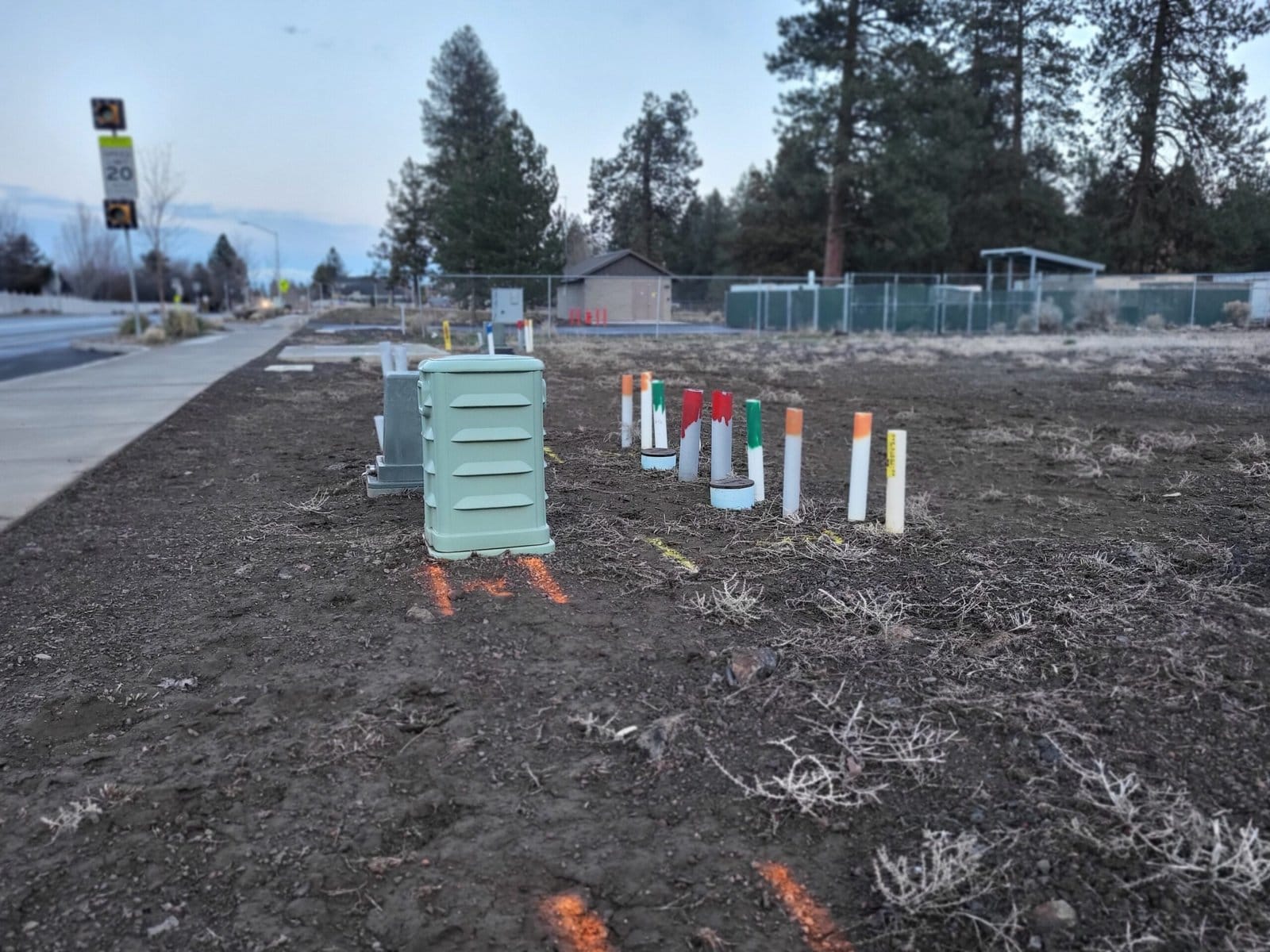
Vacant land site due diligence is the checking you do before you buy a lot, to learn what it will take to put a home on it. Utilities come first: where power, water, sewer and gas run, and how far each has to be extended. The paint, stakes and capped pipes on the ground are your first clues, and a lot with no power at the street can add five figures to the budget.
Look down first
When you walk a vacant lot, most people notice the view or the slope. Look down instead. Spray-painted lines, wooden stakes and capped pipes with colored paint are not random. They show what is buried underground, and missing them can add real cost to the build, as the example below shows.
Why utility locates matter
Before anyone digs, you want a clear picture of what is already underground:
- Where power, gas, water and sewer lines run
- Whether the lot has stub-outs in place
- How far utilities must be extended if they are missing
Missing or misidentified utilities can slow permits, add cost, or make a lot unworkable without major investment. Spotting the clues early lets you ask better questions, or walk away before you are in too deep.
What the marking colors mean
The Oregon Utility Notification Center publishes the colors locators use to mark underground lines. Here is the list as the center gives it:
- Red: electric power lines, cables and conduit, and lighting cables
- Yellow: gas, oil, steam and petroleum
- Orange: communications, alarm or signal lines, and fiber
- Blue: drinking water
- Green: sewer and drain lines
- Purple: irrigation, slurry and reclaimed water
- Pink: temporary survey marks
- White: the excavator’s proposed dig area
The center’s own page on the marking color code notes the colors follow the American Public Works Association code. Confirm the current list with the center before you rely on it for a specific lot.
Marks are temporary. Fresh paint can mean a locate request was made for the lot, or that someone is preparing to dig nearby.
Calling 811 before you dig
Under Oregon law (ORS 757.557), anyone planning to excavate must notify the Oregon Utility Notification Center, reached by calling 811, before digging, with limited exceptions such as emergencies and shallow digging under 12 inches by an owner or tenant on their own private property outside any easement (OAR 952-001-0050).
Plan the timing. Oregon’s dig rules require notice to the center at least two full business days, and no more than 10 full business days, before excavation begins. Weekends and legal holidays do not count (OAR 952-001-0050 and 952-001-0010).
Oregon’s dig law puts the duty to call on the person doing the digging (ORS 757.557). We found no Oregon statute or center rule that limits locate requests to the property owner. If you are still in your due diligence period and want marks on a lot you do not own yet, confirm with the center how to request them, and ask the seller for any past locate tickets.
Private lines may not be marked
Under ORS 757.552, a locate request goes through the center to the operators of underground facilities, who are asked to mark them. Lines on the property itself may not be marked, including:
- Secondary electric lines, such as from the meter to a garage
- Septic systems and private water lines
- Underground propane tanks and irrigation lines
Confirm with the center what a locate covers on your lot, especially on a previously developed lot or a larger parcel. For a fuller picture you can bring in a private utility locator, who uses ground-penetrating radar and electromagnetic tools to trace lines a public locate may not mark.
A real example: the missing power stub
We once reviewed a property advertised as “power at the street.” A green transformer box sat nearby, but there were no red markings or painted stakes on the lot. Once the marks went in, the answer was clear: the nearest available drop was more than 500 feet away.
The cost to bring power in ran to five figures. That single missing mark was the difference.
What to look for on a site walk
Bring this list when you walk a lot:
- Color-coded stakes, paint lines or pipe stubs
- Visible stub-outs or capped pipes near the lot corners
- Whatever you see, matched against the plat map and utility records
- Past locate tickets or records from the seller
- A SiteFacts Report to check utility access, easements and distance to connection
For a wider checklist covering slope, access and soil, the Land Buyer’s Field Guide goes deeper. If you are still deciding whether a lot is worth pursuing, the Land Feasibility Quiz is a quick first pass.
Find where the power actually ends
Reading utility markings is part of finding out whether a lot is ready to build on. On your next site walk, look for the red marks and find out where the nearest power drop is before you make an offer. A lot advertised with power at the street can still sit more than 500 feet from it.
Want a second set of eyes on a lot? We walk the site with you and explain what we see.